
Florida’s recent tort reform measures have reduced property and casualty insurance costs and generated billions of dollars in economic activity, according to a February analysis of the state’s legal and insurance environment.
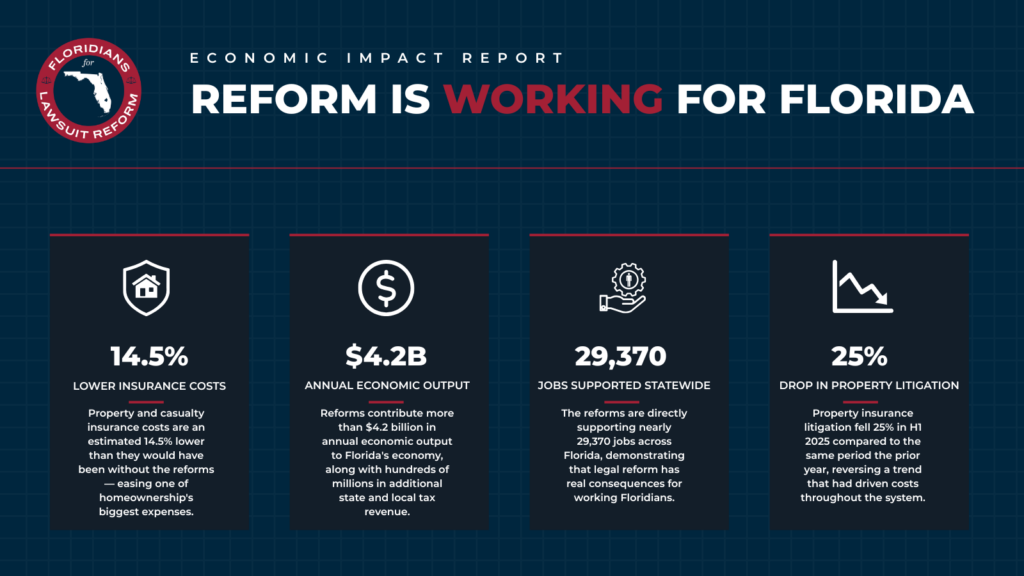
A study by The Perryman Group found the reforms cut insurance costs by an average of 14.5% compared with what rates would have been without the policy changes, producing financial benefits for consumers and businesses across the state.
The report estimates the lower costs have helped free up spending, contributing more than $4.2 billion in additional annual gross product and supporting about 29,370 jobs statewide when multiplier effects are included. The increased economic activity also is projected to generate roughly $206.6 million in annual tax revenue for the state and $155.3 million for local governments.
Researchers examined recent legislative changes that reshaped Florida’s civil justice system. The measures altered negligence standards, shortened statutes of limitations and revised attorney fee structures. Lawmakers also eliminated certain one-way attorney fee provisions and limited the assignment of insurance benefits to third parties, steps intended to stabilize the property insurance market and reduce litigation costs.
According to the study, the changes have helped increase competition among insurers, with more companies entering the market and hundreds of thousands of policies returning to private carriers. Lawsuits against property insurers also declined significantly, with filings falling 25% in the first half of 2025 compared with the same period a year earlier.
The report describes the reforms as an effort to rebalance the civil justice system by reducing excessive litigation costs while maintaining the ability of injured parties to seek compensation. It argues that an unbalanced system can raise business expenses, drive up insurance premiums and discourage economic development.
Overall, the study concludes the reforms have produced measurable economic gains by lowering costs and encouraging greater market participation. Those benefits, the report says, are expected to grow over time, strengthening Florida’s business climate and supporting continued economic expansion.